


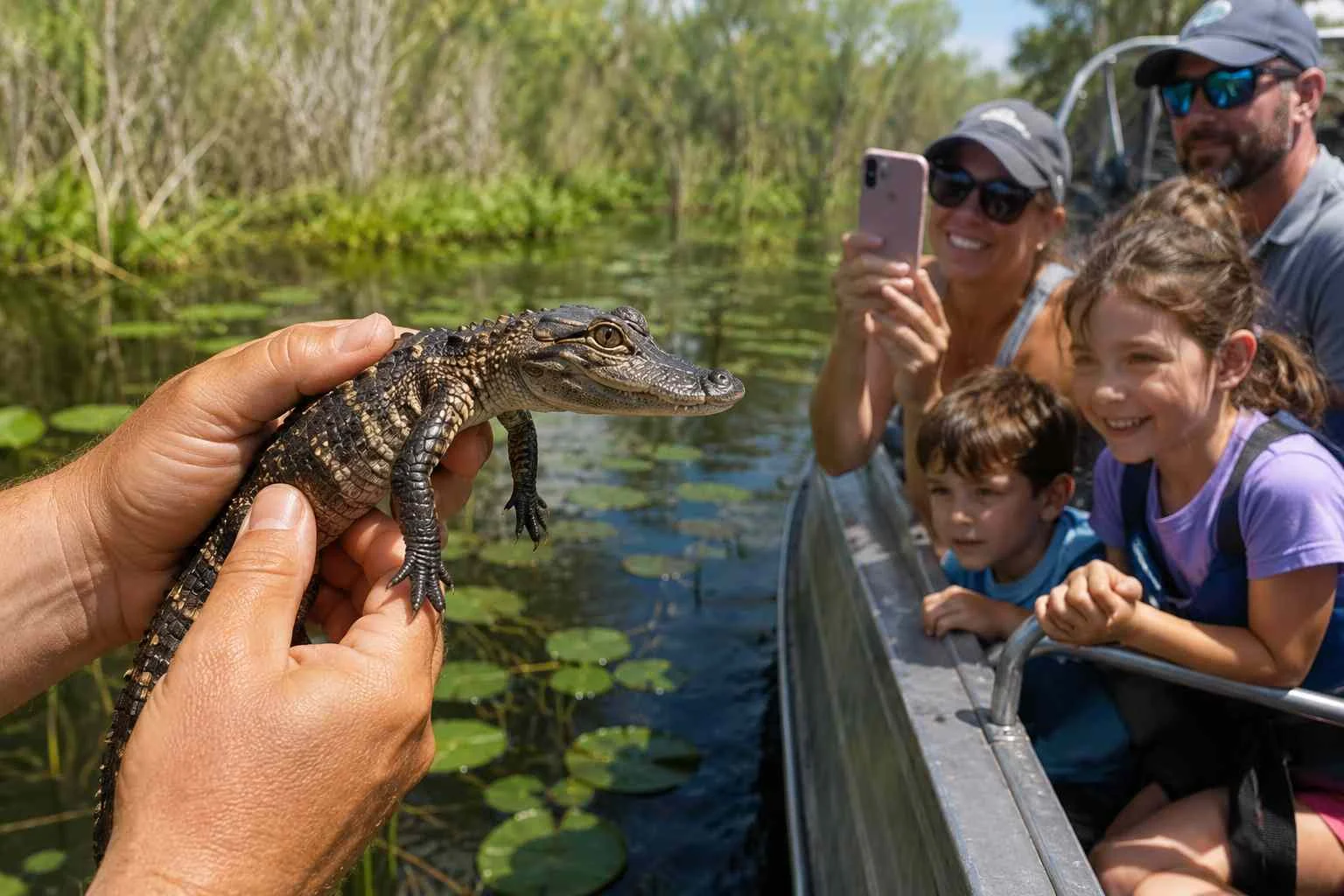
Wetland swamp tours offer a chance to see baby gators and birds. They also allow visitors to observe other native creatures in their natural setting. Wildlife visibility varies by season, water conditions, and position within marsh systems. Controlled access to these ecosystems is provided through guided airboat rides. These tours also allow safe observation of animals, including juveniles, in protected regions.
Key Takeaways
- Baby alligators are often found in protected wetland nesting places.
- Sightings vary with the season, water levels, and disturbance conditions.
- Most swamp tours wildlife is seen from a distance and with a guide.
- Airboat rides follow controlled paths, not disturbing nesting areas.
Baby Gators and Other Wildlife: What You’ll See on an Airboat Tour
Baby alligators are often found in shallow marshes, grassy margins, and slow-moving water. These areas are where nesting typically takes place. Young alligators often stay near protective parents early in life. Wildlife sightings during swamp trips depend on timing and environmental conditions. U.S. Fish & Wildlife Service notes young alligators need vegetative cover for protection. They also rely on it for feeding during early developmental stages.
What You Typically See on Airboat Tours
Most guided airboat trips run through wide marsh channels with clear visibility. Common wildlife sightings include turtles, wading birds, and fish. Sometimes, alligators of all sizes can also be seen. Baby alligators are sometimes seen among shoreline foliage or floating plants. Wetland breeding studies and National Geographic data help explain the baby gator presence.
Habitat Conditions Influencing Sightings
Water levels, temperature, and vegetation density affect what wildlife you may see. These factors influence sightings on a swamp trip. Higher water levels spread species over wider areas. Lower levels may concentrate creatures in deeper channels. Baby alligators are more often seen in quieter areas with less boat activity. Environmental conditions in wetlands influence wildlife behavior in several ways:
- Shallow wetlands provide better sightlines for nesting.
- Young reptiles are hidden by dense vegetation.
- Effect of seasonal rainfall on migration patterns.
These factors together shape how and where wildlife is observed in wetland areas.
Safety & Wildlife Distance Rules
Airboat rides follow safety rules that protect both visitors and wildlife. These rules require keeping a safe distance from nests. They also require avoiding contact with baby alligators so they can behave naturally. The Florida Fish and Wildlife Conservation Commission sets safe viewing rules for wetlands.
The Guided Tour Operator’s Role
Professional operators like Swamp Fever Airboat Adventures have established routes. These routes are designed for ecological safety and clear wildlife viewing. They design their tours so passengers can responsibly observe wildlife. This is done with minimal disruption to the habitat. This resource helps broaden comprehension of swamp tours and local wildlife patterns. Additional instructional material regarding wetland ecosystems can also be found here.
How Environmental Factors Affect Baby Alligator Sightings
Whether or not you see baby alligators depends on a mix of ecological factors. Seasonal breeding affects the peak visibility of juveniles. Water temperature influences feeding activity. During breeding season, baby alligators are often seen in shallow protected areas. These conditions also affect wildlife behavior on swamp tours. They influence bird nesting patterns and fish movement.
Background on Conservation and Wildlife Protection
Many areas manage alligator numbers to keep an ecological balance. Baby alligators have a vital role in sustaining populations. Conservation policies ensure airboat rides do not interfere with breeding cycles. They also protect growth cycles. Protected habitats are vital for young survival, according to the National Wildlife Federation.
Frequently Asked Questions
1. Will I be able to view juvenile alligators on swamp tours?
There’s no assurance of sightings. Baby alligator survival depends on the season and environmental conditions. It also depends on where they are in the swamp.
2. Are baby alligators dangerous on airboat rides?
There is no direct interaction with baby alligators during tours. Operators keep a safe distance, and baby alligators tend to stay away from boats.
3. When is the greatest time of year to see newborn alligators?
Spring and early summer are often the busiest breeding seasons. During this time, swamp tours offer more visible wildlife sightings.
4. Do you get to see wildlife on all swamp tours?
Most airboat tours sail through natural settings where wildlife is often seen. However, sightings vary from day to day.
