


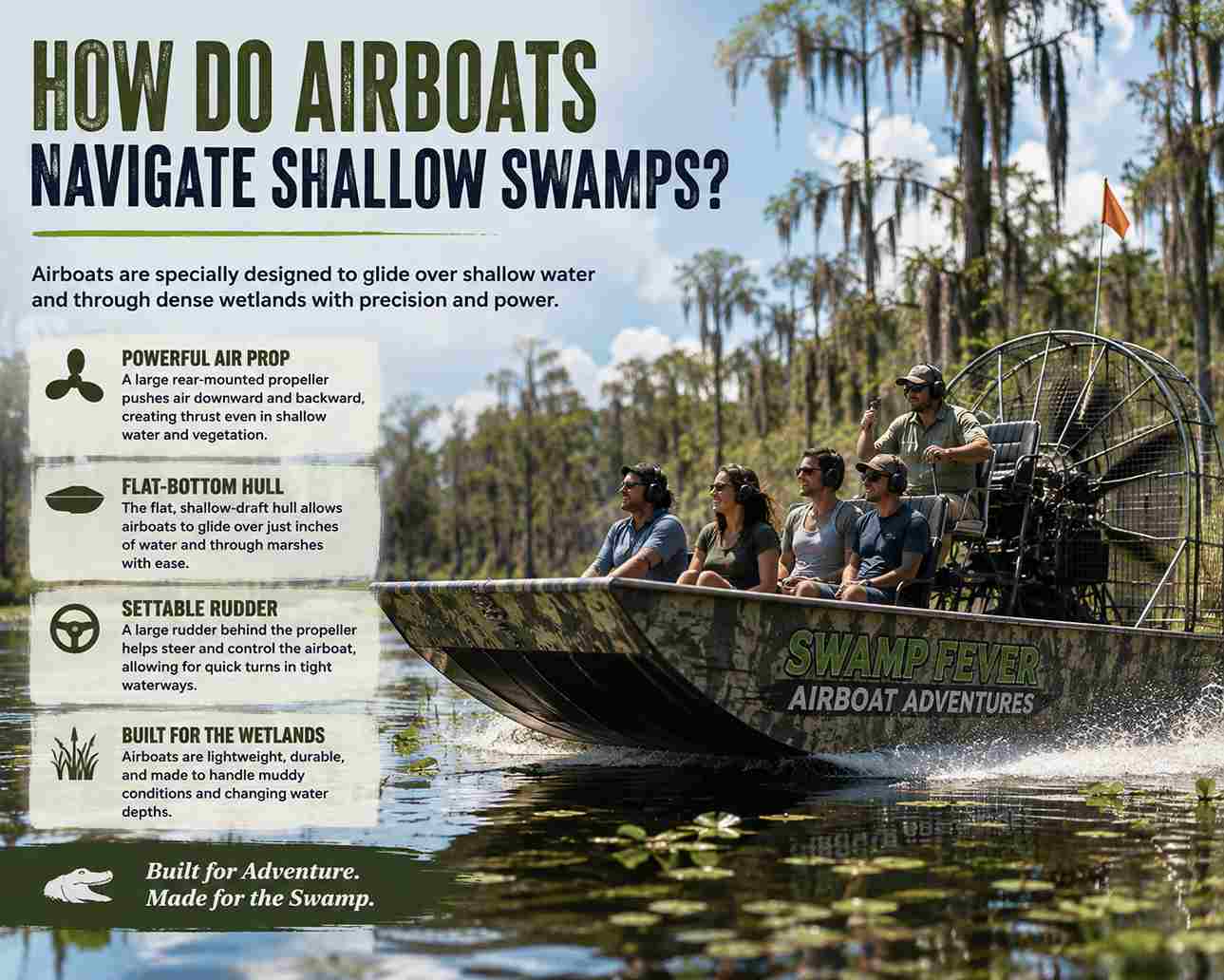
Airboats navigate shallow swamps using a flat-bottom hull. It glides over just a few inches of water. A rear-mounted propeller pushes the boat forward. This rare design allows them to travel through marshes and wetlands.
It also allows them to cross grassy areas where conventional boats cannot operate. As a result, airboat tours provide a safe and efficient way to explore Florida’s swamps. Visitors can also experience the region’s unique wildlife and ecosystems.
Key Takeaways
- An airboat has a propeller above the water rather than underneath it.
- Flat-bottom hulls permit travel in shallow water and marshes.
- Airboat swamp trips lessen the risk of damaging the propeller submerged in the water.
- Operated by trained personnel to recognized safety and environmental standards.
- An airboat can take you to places that a normal boat can’t access, like wetlands.
How Airboats Work: Exploring Florida’s Shallow Waterways during Swamp Tours
Unlike traditional boats, airboats use a large aircraft-style propeller. It is mounted above the hull. This propeller creates forward thrust and has no submerged mechanical components. This allows airboat trips to comfortably go over water that may be just inches deep.
The flat-bottom hull distributes the weight of the boat equally over the surface. The hull does not sink deep into the water. Instead, it skims over dirt, plants, and shallow channels commonly found on swamp tours. The design enhances mobility and reduces the risk of grounding.
Why Airboats Can Navigate Through Shallow Swamps
Traditional boats need submerged propellers or jet drives, which require deeper water. Airboats do not have this limitation. Their propulsion system is mounted above the waterline. The design characteristics are:
- Flat-bottom hulls made of aluminum or polymer
- Style propeller aircraft elevated
- Light construction
- Raised operator platform for a greater view
- Broad hull surface that transfers weight effectively
These features make airboats ideal for swamp trips. They can easily navigate Florida’s marshes, flooded meadows, and cypress swamps.
How Does an Airboat Propeller Work?
The propeller pushes air backward to move the boat forward. The boat moves even in very shallow water because it is propelled by air instead of water. The rudders behind the propeller are moved by the operators to steer. When air flows over these rudders, they alter the course of the boat. It allows easy navigation through narrow wetland channels. Learn more from airboat engineering and Florida wildlife resources.
Why Flat-Bottom Hulls Work
A flat-bottom hull provides little draft; thus, only a small part of the boat is below the waterline. The short draft permits passage into shallow marshes not accessible to regular boats. The hull also slides over rather than digging into aquatic plants. This improves agility. It also helps operators avoid submerged obstacles during swamp tours.
Airboat Tour Safety Precautions are Taken
Professional operators follow safety procedures to protect passengers and the environment. Safety practices include:
- Conducting pre-flight safety briefings
- Protecting Your Hearing
- Requiring life jackets when necessary
- Checking the weather conditions before leaving
- Following set routes
Many operators also follow Florida boating safety laws.
Environmental Considerations for Airboat Swamp Tours
Good operators stay on authorized routes. They don’t go to delicate wildlife habitats to minimize environmental impact. This reduces erosion and wildlife disturbance by maintaining proper speeds.
Wildlife viewing is a key part of many airboat trips. Visitors can see alligators, turtles, wading birds, fish, and native plants. They can explore without entering sensitive habitats on foot.
Where Airboats are Commonly Found
Florida has large areas of wetlands that are suitable for airboat use. They are often found in marshes, cypress swamps, floodplains, and conservation areas. Many Orlando airboat tours take place near the Everglades headwaters and surrounding wetlands. Water levels in these areas are shallow and change throughout the year. These sites offer the opportunity to study native wildlife and wetland ecology.
Swamp Fever Airboat Adventures and similar organizations provide educational experiences. They help guests explore Florida’s wetlands while promoting safe, responsible navigation.
Frequently Asked Questions
1. How shallow can I run an airboat?
Airboats don’t use much water to operate. Their propulsion is above the water, and their hull has a shallow draft.
2. Why don’t airboats have underwater propellers?
Underwater propellers can be unsafe in shallow wetlands. Airboats avoid this with a high-mounted propeller.
3. Are airboats safe to ride?
Yes. Certified operators follow safety measures and inform riders. They also monitor weather conditions and comply with boating laws.
4. What types of fauna can be found on swamp tours?
Depending on the season and location, visitors may spot alligators, turtles, and more. They may also spot fish and native plant species.
