


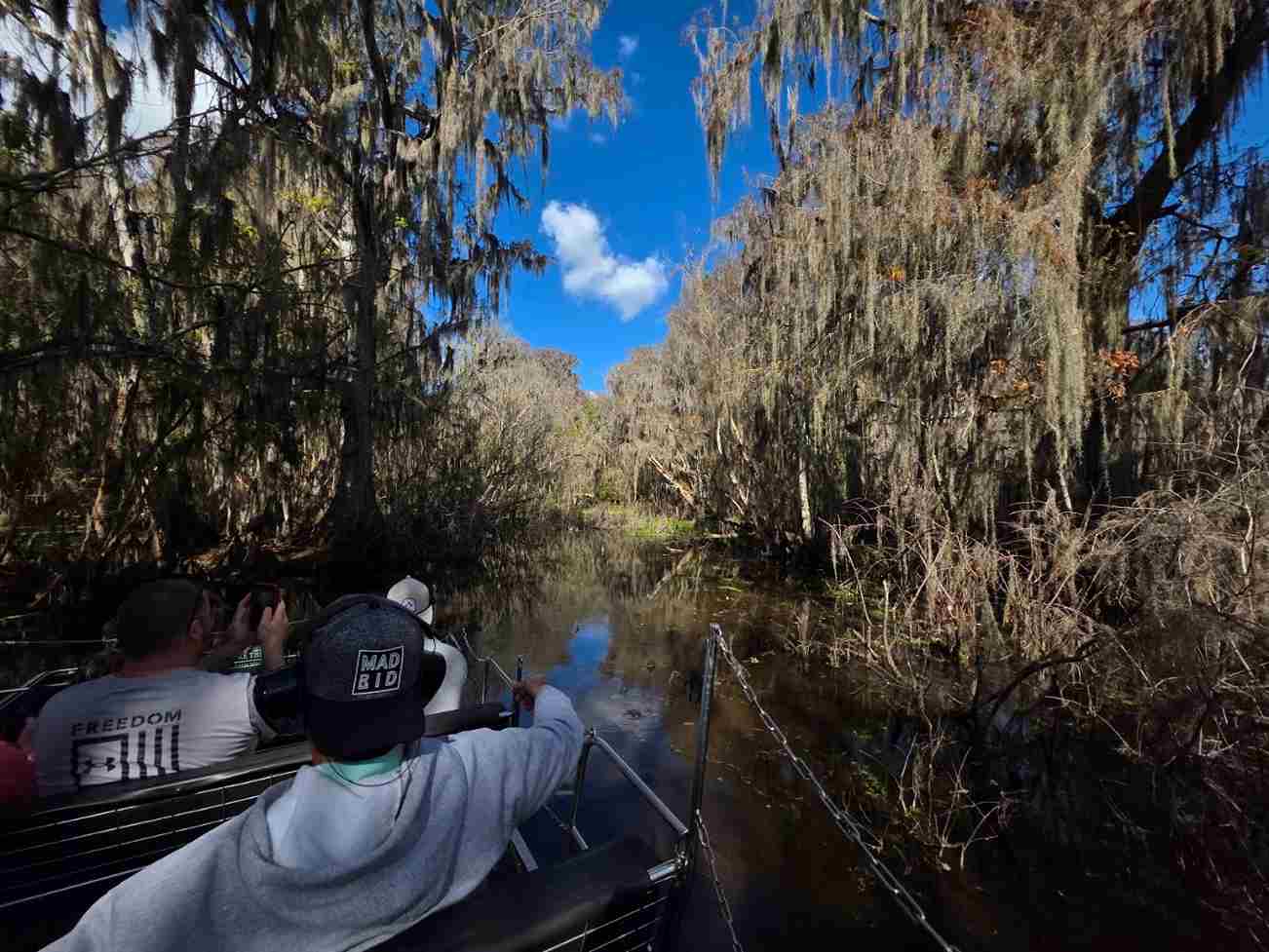
Swamp guides identify alligators in Florida using particular visual clues. They search for eye lumps and exposed snouts on the water’s surface. At night, they look for clear red reflections. To locate these creatures, they use their understanding of regional rivers and gator habitats. They do this while also making sure guests maintain a safe distance during alligator tours.
Key Things to Think About
- It’s crucial to have good observing abilities. Guides keep an eye out for ripples, red eyes, and other indications of Florida alligator activity.
- Habitat is important. Freshwater marshes, lakes, rivers, and slow-moving waterways are common gator habitats.
- Animal behavior provides hints. Swamp guides use their knowledge of basking, feeding, and courting habits to expect gator whereabouts.
- Safety is the top priority at all times. Florida alligator tour guides keep the proper distance. They refrain from feeding or upsetting wild alligators.
Behind the Scenes: How Swamp Guides Locate Alligators in Florida
Skilled swamp guides take advantage of their understanding of wildlife and meticulous observation skills. Additionally, they are aware of potential alligator habitats.
- Searching for Snouts and Eyes Above the Water
The tiny part of a Florida alligator‘s head that’s visible above the water is one of its most identifiable characteristics. Alligators expose their eyes and nostrils while keeping the majority of their body underwater. This enables them to breathe and take in their environment.
Swamp guides look for these on the water’s surface. It is sometimes challenging to tell the eyes and snouts apart from shadows or floating plants. Visibility is also affected by sunlight, glare, and water clarity. To increase their chances of seeing a gator, guides modify their viewing angle.
- Observing Water Movement and Ripples
Alligators have the ability to stay still if they so choose. But occasionally their motions cause minor disruptions. A knowledgeable guide observes ripples forming in apparently motionless water.
Water ripples do not prove the presence of an alligator, though. The water can also be disturbed by birds, wind, fish, and turtles. Before determining the source of movement, skilled guides check the surrounding habitat and other visual cues.
- Identifying Appropriate Habitats for Alligators in Florida
American alligators enjoy a range of habitats in Florida. There are lakes, rivers, ponds, swamps, and freshwater marshes in the state. Wetlands that offer food and refuge are typically home to alligators. Additionally, they’re seen in locations where they’re able to control their body temperature.
Swamp Fever Airboat Adventures knows which sections of a waterway offer favorable conditions. Shallow areas, vegetated shorelines, and quiet backwaters provide useful places to search. Alligators in Florida are also seen in open water. This knowledge helps guides focus their attention instead of scanning the entire swamp.
- Comprehending Daily and Seasonal Behavior
The environment impacts an alligator’s behavior. Temperature affects how active these reptiles are since they rely on outside heat. Their eating habits and habitat use are also affected.
Alligators in Florida are often observed swimming, basking, or participating in other activities during the warmer months. They become less active in colder weather, which makes them more difficult to identify. Their behavior and movements are also influenced by the spring and early summer breeding season.
Guides use their knowledge of these patterns to improve their searches. Wildlife behavior is variable and no season or time of day guarantees an alligator sighting.
Frequently Asked Questions
What is the easiest way to spot a Florida alligator?
Search for eyes and nostrils near the water’s surface. Look for alligators basking along shorelines and movement in suitable wetland habitats. Alligators can be distinguished from other creatures and natural objects with the help of a professional guide.
What time of day are alligators easiest to see?
People on alligator tours in Florida can see these animals at different times of day. Behavior, weather, and temperature all play a role. In cooler weather, gators may bask. Under more favorable circumstances, they may become more active.
Can swamp guides guarantee an alligator sighting?
No. Alligators are wild creatures whose activity and visibility vary depending on their surroundings. To increase the chance of seeing an alligator, tour guides use their expertise and understanding of the area.
Is it safe to take airboat alligator tours to observe gators?
Florida alligator tours offer a chance to see these animals. They also take the necessary safety measures. Visitors should stay in the appropriate seating areas and pay attention to their guide. They should refrain from touching wildlife. Never try to feed or get close to an alligator by yourself.
